

- What Does "Low Cost" Actually Mean in Data Annotation?
- The Real Cost of "Cheap" Annotation (And Why It Backfires)
- Where to Actually Hire Low Cost Annotators in 2025
- How GetAnnotator Delivers Low Cost Without the Compromises
- Who Should Hire Low Cost Annotators Through Get Annotator?
- Red Flags When Hiring Low-Cost Annotators
- The Bottom Line: Low Cost Means Smart Value, Not Cheap Labor
- Ready to Hire Annotators Who Deliver Real Value?
Where to Hire Low-Cost Annotators Without Sacrificing Quality
Here’s a truth that most AI teams learn the hard way: cheap annotation usually means expensive mistakes. But what if you could get quality annotation work without breaking your budget?
The challenge isn’t just finding affordable annotators—it’s finding ones who actually understand your data, deliver consistent quality, and don’t disappear halfway through your project. Whether you’re a startup burning through your seed funding or an established company trying to optimize costs, the question remains the same: where can you hire low cost annotators who won’t mess up your training data?
The answer isn’t as simple as picking the cheapest freelancer on a marketplace. In fact, that approach often costs you more in the long run when you factor in quality issues, project delays, and the time spent managing inconsistent work.
What Does “Low Cost” Actually Mean in Data Annotation?
Let’s be honest about what “low cost” really means in 2025.
Low cost doesn’t mean paying $2/hour for someone who has no idea what a bounding box is. That’s not cost-effective—that’s just setting money on fire while your AI project stalls.
True low-cost annotation means getting the best value for your money: skilled annotators who deliver accurate work at reasonable rates, without hidden fees, management overhead, or quality issues that force you to redo everything.
Think about it this way: Would you rather pay $8/hour for an annotator who gets 60% accuracy and needs constant supervision, or $15/hour for someone who delivers 95% accuracy on the first try? The second option is actually cheaper when you calculate the real cost per usable annotation.
Here’s what genuinely affects annotation costs:
- Annotator skill level and domain expertise
- Data complexity (2D images vs. medical scans vs. LiDAR)
- Quality control requirements
- Project management overhead
- Tool and platform fees
- Geographic location of annotators
The Real Cost of “Cheap” Annotation (And Why It Backfires)
Let’s talk about what actually happens when teams chase the absolute lowest prices:
You find annotators on a freelance platform offering $5/hour rates. Seems like a steal, right? You hire them, send over your data, and wait. The work comes back… and it’s wrong. Labels are inconsistent. Instructions weren’t followed. Half the images have errors that your model will definitely learn.
Now you’re stuck: Do you spend hours explaining what went wrong? Do you hire someone else to fix it? Do you start over completely?
Suddenly, that “cheap” annotation has cost you:
- Two weeks of project delays while you sort out the mess
- Your own time managing, reviewing, and fixing annotations (that’s your salary cost)
- Additional hiring costs to find someone who can actually do it right
- Opportunity cost of not launching on schedule
A research team at a healthcare AI startup learned this lesson hard. They hired low-cost annotators at $6/hour to label medical images. After three months, they discovered their model was performing poorly because 40% of the annotations were incorrect. They ended up paying a specialized medical annotation team to redo everything—at $25/hour. The “cheap” approach costs them 5x more than just hiring quality annotators from the start.
That’s why smart teams focus on cost per accurate annotation, not just cost per hour.
Where to Actually Hire Low Cost Annotators in 2025
Let’s break down your real options, with the honest pros and cons that nobody talks about:
Option 1: Freelance Marketplaces
These platforms connect you with individual annotators worldwide, often at attractive hourly rates.
What you’ll find:
- Rates ranging from $5-$30/hour, depending on location and skill
- Thousands of profiles to choose from
- Flexibility to hire multiple people for different tasks
The reality check:
- You’re gambling on quality every single time
- You spend massive amounts of time screening, interviewing, and testing
- No guarantee annotators will stay available throughout your project
- You handle all project management, quality control, and payment processing
- Inconsistency across different annotators means your data quality varies wildly
Best for: Very small projects (under 1,000 annotations) where you have time to closely supervise and can afford to experiment.
Not good for: Anything mission-critical, projects with tight deadlines, or teams without dedicated annotation management resources.
Option 2: Crowdsourcing Platforms
Massive pools of workers are completing small tasks for pennies to a few dollars per task.
What you’ll find:
- Extremely low per-task costs (often $0.01-$0.10 per annotation)
- Ability to process huge volumes quickly
- Global workforce available 24/7
The reality check:
- Quality is all over the place—workers often have zero domain knowledge
- You need sophisticated quality control systems (which cost money to build)
- No accountability when work is subpar
- Workers aren’t invested in your project’s success
- High error rates mean you need multiple annotations per item (tripling your actual cost)
- Data security concerns with unvetted workers
Best for: Simple, high-volume tasks like basic image classification, where you can use consensus across multiple workers. Product companies doing sentiment analysis at scale.
Not good for: Complex annotation, domain-specific work (medical, legal, technical), or projects where data privacy matters.
Option 3: Offshore Annotation Companies
Business process outsourcing firms, often based in India, the Philippines, Eastern Europe, or Africa, offer managed annotation services.
What you’ll find:
- Rates typically $8-$18/hour for managed teams
- Dedicated teams assigned to your project
- Project managers handling day-to-day coordination
- Established quality control processes
The reality check:
- Communication barriers can slow things down
- Time zone differences complicate real-time collaboration
- Quality varies significantly between providers
- Hidden costs in contracts (setup fees, minimum commitments)
- Long onboarding periods (2-4 weeks typical)
- Less flexibility to scale up or down quickly
Best for: Large, ongoing projects (3+ months) where you need predictable capacity and have time for proper onboarding.
Not good for: Fast-moving projects, specialized domains requiring deep expertise, or teams needing real-time collaboration.
Option 4: Get Annotator
A purpose-built platform, such as Get Annotator, connects you with vetted annotation specialists through subscription or project-based models.
What you’ll find:
- Pre-vetted annotators with verified track records
- Structured quality control is built into the platform
- Real-time progress tracking and communication
- Flexible pricing models (subscriptions or per-project)
- Fast onboarding (24-48 hours typical)
The value equation:
- Rates typically $15-$30/hour, but with much higher accuracy (95%+ vs. 70-80%)
- Someone else handles recruitment, vetting, and management
- Your actual cost per usable annotation is often lower than “cheaper” options
- Platforms like ours, GetAnnotator, offer subscription models starting at $499/month for dedicated annotators
Best for: Teams that value time and quality over rock-bottom hourly rates. Projects with specific domain requirements. Any situation where annotation quality directly impacts model performance.
Reality: This is where you get the best balance of cost and quality—not the absolute lowest price, but the best return on investment.
How GetAnnotator Delivers Low Cost Without the Compromises
Here’s where we need to be direct: GetAnnotator isn’t the absolute cheapest option. You can definitely find someone on Fiverr willing to annotate for less.
But here’s what Get Annotator offers that changes the cost equation completely:
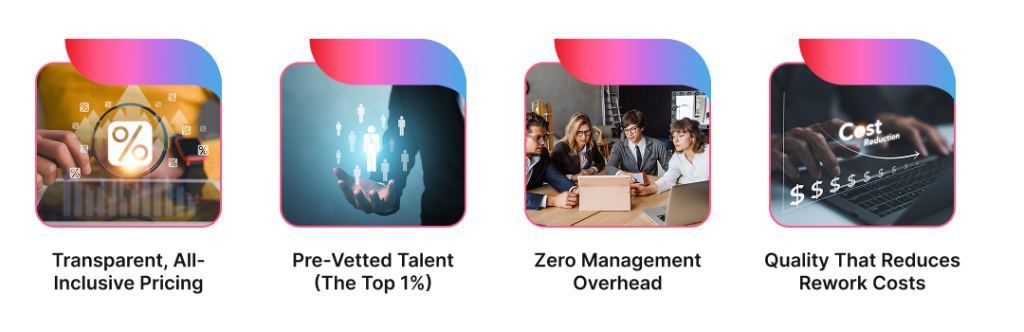
Transparent, All-Inclusive Pricing
Skilled Plan: $499/month
- One dedicated annotator (160 hours/month)
- That’s $3.12/hour of work—but with 2 years of verified experience
- No project management fees
- No platform fees
- No surprise charges
Compare that to hiring a freelancer at $8/hour, then spending 10 hours of your own time (worth $50-$100/hour) managing them, reviewing work, and fixing errors. Your “cheap” annotation just cost you way more.
Advanced Plan: $649/month
- Experienced annotator plus dedicated project manager
- Daily reporting and timeline tracking
- Quality checks before delivery
- Support for complex 2D and 3D work
Expert Plan: $899/month
- Senior annotators with 4+ years of domain expertise
- Medical, LiDAR, legal/finance specialization
- Real-time dashboard access
- Priority support with SLA guarantees
Pre-Vetted Talent (The Top 1%)
Here’s what most people don’t realize about “finding cheap annotators”: You’re actually paying for the vetting process with your time.
Get Annotator has already done that work. Every annotator has been:
- Tested on actual annotation tasks
- Verified for accuracy rates
- Trained on quality standards
- Background-checked for data security
You’re not gambling. You’re getting proven professionals.
Zero Management Overhead
With freelancers or crowdsourcing, your cost isn’t just the hourly rate. It’s also:
- Time spent recruiting and interviewing
- Project management time
- Quality control time
- Payment processing
- Handling availability issues
GetAnnotator handles literally all of that. You assign tasks, they deliver quality-checked results. That management time you save? That’s real money staying in your budget.
Flexible Scaling
Need 2 annotators this month and 10 next month? No problem—just adjust your subscription. Try doing that with freelancers or BPO contracts without massive friction and cost.
Quality That Reduces Rework Costs
Get Annotator maintains ~95%+ accuracy across modalities. That means:
- Minimal rework needed
- Your model trains on clean data
- No expensive do-overs
- Faster time to production
When you calculate cost per usable annotation, Get Annotator often beats “cheaper” options by 30-50%.
Who Should Hire Low Cost Annotators Through Get Annotator?
Not everyone needs the cheapest possible annotation. But certain teams get massive value from GetAnnotator’s cost-effective approach:
Startups Optimizing Burn Rate
You’ve got 18 months of runway and every dollar counts. You can’t afford a $120K/year in-house annotator, but you also can’t risk your MVP on inconsistent freelancers.
Get Annotator’s Skilled Plan at $499/month gives you reliable capacity without the commitment or overhead of a full-time hire. That’s 6K annually vs. 120K—and you can pause anytime.
Pain points solved: Limited budget, need for flexibility, can’t afford quality gambles that delay your next funding round.
Small Teams Doing More With Less
Your data science team is already stretched thin. The last thing anyone wants is to become an annotation project manager on top of their actual job.
Get Annotator removes the management burden completely. Your team stays focused on model development while someone else ensures the training data keeps flowing.
Pain points solved: No bandwidth for hiring and management, need immediate results, can’t let annotation bottleneck the entire AI pipeline.
Companies With Sporadic Annotation Needs
Maybe you need heavy annotation for 2 months, then nothing for 3 months, then a burst again. Traditional hiring doesn’t work for this pattern, and keeping freelancers on standby is expensive and unreliable.
Monthly subscriptions with no lock-ins mean you pay only when you need capacity. Scale up for launches, scale down during quiet periods.
Pain points solved: Variable project cycles, budget constraints, unpredictable annotation volume.
Teams Burned By Cheap Annotators Before
You’ve tried the Fiverr route. Or the offshore vendor that promised the world. You’ve learned that cheap often means expensive in hidden costs.
Get Annotator offers cost-effective quality—not just the lowest price, but the best value when you account for accuracy, reliability, and saved management time.
Pain points solved: Past quality issues, time wasted on rework, frustration with unreliable vendors, need for proven reliability.
Red Flags When Hiring Low-Cost Annotators
Watch out for these warning signs that “low cost” will become “high cost”:
- Rates significantly below market ($3-5/hour for complex work) → Usually means inexperienced annotators or sweatshop labor conditions
- No portfolio or verification system → You’re taking a complete gamble on quality
- Reluctance to do a small paid test → They know their work won’t pass scrutiny
- No quality control process mentioned → You’ll be doing all QA yourself (expensive)
- Vague about data security and NDAs → Your sensitive data might not stay secure
- Poor communication during initial contact → Will only get worse during actual project work
- Hidden fees in fine print → “Low cost” suddenly becomes expensive
The Bottom Line: Low Cost Means Smart Value, Not Cheap Labor
Here’s what we’ve learned after talking to hundreds of AI teams: The cheapest option is rarely the most economical choice.
Low-cost annotation isn’t about finding the lowest hourly rate on the internet. It’s about finding the best value—skilled annotators who deliver accurate work efficiently, without eating up your time or budget with management overhead and quality issues.
For most teams, that means moving away from freelancer gambling and crowdsourcing chaos toward professional platforms that provide vetted talent, quality guarantees, and transparent pricing.
GetAnnotator was built specifically to solve this problem: giving you access to top-tier annotation specialists at subscription prices that actually make sense for growing teams. Not rock-bottom rates that come with rock-bottom quality. But a genuine value that reduces your true cost per usable annotation while freeing your team to focus on building better AI.
You don’t have to choose between quality and affordability anymore. You can have both—if you’re smart about where you look.
Ready to Hire Annotators Who Deliver Real Value?
Stop wasting time and money on unreliable freelancers. Get matched with pre-vetted annotation specialists who deliver quality work at transparent, affordable rates.
Start your Get Annotator subscription today
Plans starting at $499/month — dedicated annotators, zero management headaches, quality you can trust.
Because low cost shouldn’t mean low quality. And your time is way too valuable to spend managing annotation chaos.
 Previous Blog
Related Blogs

May 2, 2026
Why Hire Dedicated Data Annotators Over Platforms?
Struggling with inconsistent annotations, missed deadlines, or poor-quality datasets? You are not alone. As machine learning models become more advanced, the demand for highly accurate training data has skyrocketed. AI success depends heavily on the quality of the data feeding it. If you feed a model poorly labeled data, you will get poor predictions. When […]
Read More

April 25, 2026
How to Hire Linguistics Freelancers for AI Data
Artificial intelligence models rely on massive amounts of high-quality language data to function properly. Whether you are building natural language processing (NLP) algorithms, speech recognition tools, or complex multilingual models, accurate data annotation is essential. However, simply labeling text or audio is no longer enough to train advanced AI. Linguistics expertise matters because human language […]
Read More

April 3, 2026
What is Annotation Throughput? Tasks per Hour Explained
Building a successful artificial intelligence model requires massive amounts of labeled data. As teams push to scale their AI models, the demand for high-quality data annotation grows exponentially. Speed becomes a critical factor. The faster your team can accurately label data, the sooner your machine learning models can move from development to production. This brings […]
Read More

March 30, 2026
Bounding Box vs. Polygon Annotation: A Complete Guide
Training an AI model to “see” requires massive amounts of labeled data. Image annotation acts as the foundational layer of computer vision, teaching algorithms how to identify and understand objects within digital images. The specific annotation method you choose directly impacts how your AI model interprets the world, fundamentally influencing its overall accuracy and performance. […]
Read More