

How to Choose the Right Medical Data Annotation Platform
Medical AI is transforming healthcare. From diagnosing diseases earlier to personalizing treatment plans, the potential is limitless. But there’s a catch: AI models are only as good as the data they learn from. In the medical field, a simple labeling error isn’t just a technical glitch—it can be a matter of life and death.
To build reliable AI, you need precise, high-quality training data. This is where medical data annotation comes in. It is the backbone of machine learning in healthcare, turning raw scans and records into intelligence. However, managing this process internally can be a logistical nightmare, plagued by high costs, slow scalability, and compliance risks.
This guide explores the critical role of medical data annotation, the hurdles developers face, and how a dedicated platform can provide the speed, accuracy, and security required to bring life-saving AI to market.
What is Medical Data Annotation?
Medical data annotation is the process of labeling medical data—such as X-rays, MRI scans, CT scans, histology slides, and patient records—to train machine learning models. Unlike general image tagging (like identifying a cat in a photo), medical annotation requires specialized knowledge. Annotators must accurately identify tumors, lesions, organ boundaries, and other clinical features.
The importance of this process cannot be overstated. High-quality annotated data allows AI systems to:
- Detecting anomalies: Identify early signs of conditions like cancer or diabetic retinopathy.
- Segment organs: Assist surgeons by outlining critical structures in 3D imaging.
- Analyze text: Extract vital information from Electronic Health Records (EHRs) using Natural Language Processing (NLP).
Without rigorous annotation, even the most advanced algorithms remain blind.
The Challenges of Medical Data Annotation
Building a dataset for medical AI is significantly harder than for other industries. Developers and data scientists often run into three major roadblocks:
1. The Need for Domain Expertise
You can’t crowdsource medical annotations to random freelancers. Labeling a CT scan for lung nodules requires a trained eye, often needing input from radiologists or medical students. Finding and vetting this level of talent is difficult and expensive.
2. Strict Data Privacy and Compliance
Healthcare data is highly sensitive. Any platform or team handling patient data must adhere to strict regulations like HIPAA (in the US) and GDPR (in Europe). A data breach or compliance violation can result in massive fines and reputational damage.
3. Scalability and Cost
Annotating thousands of DICOM images or hours of surgical video takes time. Building an in-house team is slow; you have to hire, train, and manage payroll. On the flip side, traditional outsourcing often lacks the quality control needed for medical accuracy. Balancing speed, cost, and quality is a constant struggle for AI startups.
The Solution: A Dedicated Medical Data Annotation Platform
To overcome these hurdles, forward-thinking AI companies are moving away from ad-hoc hiring and towards managed annotation platforms. A dedicated platform, like GetAnnotator (Macgence AI), bridges the gap between raw data and actionable AI models.
Instead of managing a fragmented workforce, a platform provides a structured environment where talent, tools, and project management converge.
How It Works
Modern annotation platforms simplify the workflow into a “subscription” style service:
- Define Requirements: You specify the modality (e.g., MRI, Ultrasound) and the annotation type (e.g., semantic segmentation, bounding boxes).
- Instant Deployment: Instead of waiting weeks to hire, platforms like Get Annotator assign a dedicated, pre-vetted team within 24 hours.
- Managed Execution: A dedicated project coordinator oversees the annotators, ensuring guidelines are followed and deadlines are met.
- Quality Assurance: Continuous monitoring ensures high accuracy benchmarks—crucial for medical applications.
Benefits of Using a Managed Platform
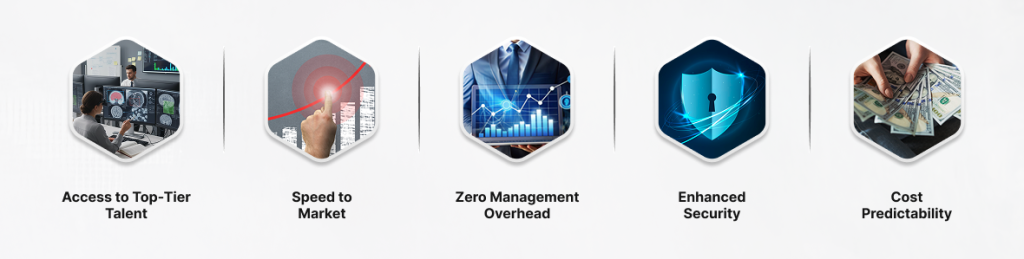
Why should a healthcare AI company switch to a subscription-based annotation platform?
Access to Top-Tier Talent
Platforms vet their workforce rigorously. With GetAnnotator, for example, you gain access to the top 1% of annotators with specific experience in medical data. This ensures that the person drawing polygons around a tumor understands the anatomy, leading to higher accuracy in training data.
Speed to Market
Time is money in the startup world. Traditional hiring takes 2-4 weeks. A managed platform gets you a team in 24 hours. This rapid deployment allows you to iterate on your models faster and get your product to clinical trials or market launch sooner.
Zero Management Overhead
Managing a team of freelancers is a full-time job. A managed solution handles the administrative burden—hiring, training, scheduling, and QC—so your internal data scientists can focus on refining the algorithm, not managing spreadsheets.
Enhanced Security
Reputable platforms prioritize data security. They operate under ISO 27001 and GDPR compliance standards, using secure workspaces to ensure patient data never leaks.
Cost Predictability
Hidden fees and fluctuating freelancer rates can blow up a budget. Subscription models offer transparency. You pay a flat monthly fee for a dedicated team, saving up to 50% compared to traditional hiring models.
Real-World Use Cases
How is this actually applied in the industry? Here are a few examples of medical annotation in action:
Radiology and Diagnostic Imaging
- Task: Annotating X-rays and CT scans.
- Method: Using bounding boxes to identify fractures or semantic segmentation to outline tumors.
- Outcome: AI models that assist radiologists by flagging potential issues for second opinions, reducing diagnostic errors.
Pathology
- Task: Analyzing digital pathology slides.
- Method: Identifying cancerous cells versus healthy tissue at a microscopic level.
- Outcome: Automated pre-screening tools that help pathologists process slides faster and more accurately.
Robotic Surgery
- Task: Labeling surgical video feeds.
- Method: Tracking surgical instruments and organs in real-time video.
- Outcome: AI systems that guide robotic arms or provide real-time feedback to surgeons during complex procedures.
Future Trends in Medical Annotation
The field is evolving rapidly. Here is what lies ahead:
- Human-in-the-Loop (HITL): As AI auto-labeling tools improve, the human role will shift from creating labels from scratch to validating and correcting AI-generated suggestions, speeding up the process further.
- Synthetic Data: To protect patient privacy, we will see a rise in the use of synthetic medical data—artificially generated data that mimics real patient records without the privacy concerns.
- Multi-Modal Annotation: AI models will increasingly learn from combined data sources—for example, correlating an MRI scan with the patient’s genetic history and clinical notes for a holistic diagnosis.
Accelerate Your Medical AI Today
The accuracy of your medical AI depends entirely on the quality of your data. Don’t let annotation bottlenecks or quality control issues slow down your innovation.
By leveraging a dedicated medical data annotation platform, you secure the expertise, speed, and security needed to build world-class healthcare solutions. It’s time to move beyond the headaches of traditional hiring and embrace a model built for the future of AI.
Ready to build your medical dataset? Get your dedicated annotation team within 24 hours at GetAnnotator.
 Previous Blog
Related Blogs

June 8, 2026
Why You Should Outsource Document Annotation
The demand for document artificial intelligence is growing rapidly across almost every industry. Organizations are constantly looking for ways to extract valuable insights from the massive volume of unstructured data they generate daily. High-quality annotated documents are essential for training the machine learning models that make this possible. Without accurately labeled data, even the most […]
Read More

June 5, 2026
Keypoint Annotation Outsourcing Guide for AI Teams
Building highly accurate computer vision models requires massive volumes of flawlessly labeled data. Machine learning engineers and data scientists face mounting pressure to deliver complex datasets rapidly. As computer vision applications evolve to recognize intricate movements and spatial relationships, basic labeling techniques fall short. Keypoint annotation has emerged as a critical requirement for modern AI […]
Read More
June 3, 2026
Scaling AI? Why You Should Outsource Text Annotation Services
Training a robust natural language processing (NLP) model requires massive amounts of high-quality data. AI algorithms do not inherently understand human language. They learn through carefully labeled datasets. Accurate text annotation provides the foundational context that allows AI systems to interpret nuances, sentiment, and user intent. As the complexity of AI models grows, so does […]
Read More

May 27, 2026
Building AI? Why You Need Trusted Data Annotation Platforms
The demand for high-quality AI training data is growing rapidly. Organizations are launching increasingly complex machine learning models, and these systems require massive amounts of accurately labeled data. Annotation quality directly impacts how well an AI model performs in the real world. A poorly trained model will make mistakes, cost your business money, and damage […]
Read More