

Work From Home Annotator: The Ultimate Guide to a Flexible AI Career
The artificial intelligence revolution is here, and it’s changing the way we live and work. But behind every smart chatbot, self-driving car, and facial recognition system, there is a human element that often goes unnoticed. AI models don’t learn on their own; they must be taught, guided, and corrected by humans. This has created a massive demand for a specific type of professional: the data annotator.
Becoming a work from home annotator offers a unique entry point into the tech industry without necessarily requiring a degree in computer science. It provides the freedom to work remotely, the ability to manage your own schedule, and the chance to contribute to cutting-edge technology. If you are looking for a career that blends flexibility with future-proof skills, data annotation might be your perfect match.
What is Data Annotation?
In simple terms, data annotation is the process of labeling data to make it usable for machine learning algorithms. Computers cannot inherently “see” an image or “understand” a sentence the way humans do. They need examples. Annotators provide these examples by tagging content so that AI models can recognize patterns.
For instance, if a company is training a self-driving car to recognize pedestrians, an annotator will look at thousands of images of streets and draw boxes around the people. This teaches the car, “This is what a human looks like.”
Common Types of Annotation Tasks
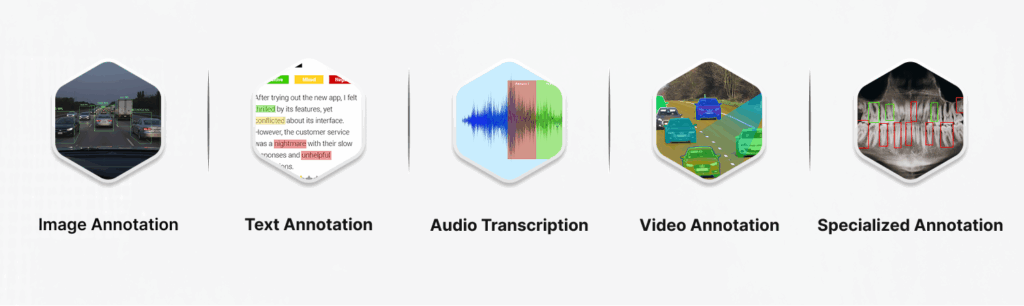
The work varies significantly depending on the project. Here are a few examples of what you might be doing:
- Image Annotation: Drawing bounding boxes, polygons, or keypoints on images to identify objects like cars, trees, or products.
- Text Annotation: Categorizing customer reviews as “positive” or “negative” (sentiment analysis), or highlighting specific entities like names and dates in a document.
- Audio Transcription: Listening to audio clips and typing out what is said to train voice assistants.
- Video Annotation: Tracking the movement of objects frame-by-frame in a video clip.
- Specialized Annotation: For those with specific backgrounds, tasks might involve labeling medical X-rays or analyzing legal documents.
Accurate data annotation is the fuel that powers AI. If the data is labeled incorrectly, the AI will fail. This makes the role of the annotator critical to the success of modern technology.
Why Work as a Work From Home Annotator?
The shift toward remote work has made data annotation an attractive career path for students, stay-at-home parents, and digital nomads alike. Here is why this role is gaining popularity.
Flexibility and Work-Life Balance
One of the biggest draws is the ability to set your own hours. Unlike a traditional 9-to-5 job, many annotation projects are task-based. This means you can often work early in the morning, late at night, or in short bursts throughout the day. This flexibility allows you to build work around your life, rather than squeezing your life around your work.
Income Potential
While entry-level annotation tasks are often paid hourly or per task, specialized roles offer higher earning potential. As you gain experience and speed, or if you possess niche knowledge (such as fluency in a second language or a background in finance or healthcare), your value as an annotator increases. Specialized platforms often pay a premium for “expert-tier” annotators who can handle complex data validation.
Skill Development
You don’t need to be a coder to benefit from the tech boom. Working as an annotator gives you a front-row seat to how machine learning works. You will develop a keen eye for detail, learn about different software tools, and understand the rigorous quality standards required in the AI industry. These are transferable skills that can open doors to project management or quality assurance roles later on.
How to Get Started as a Work From Home Annotator?
Breaking into this field is relatively accessible compared to other tech roles, but it does require preparation and the right mindset.
Basic Requirements and Skills
To succeed, you generally need a reliable computer and a high-speed internet connection. Beyond hardware, the most important “soft skill” is an extreme attention to detail. AI requires precision—if a guideline asks for a tight bounding box around a car, a loose box can confuse the model. You also need patience, as the work can be repetitive, and the ability to follow complex instructions exactly.
Step-by-Step Guide to Finding Jobs
- Research Platforms: Look for companies that specialize in data annotation services.
- Prepare Your Resume: Even if you don’t have annotation experience, highlight relevant skills like data entry, transcription, proofreading, or any multilingual abilities.
- Take Qualification Tests: Most reputable platforms will ask you to take an assessment to prove your accuracy. Take your time with these; they are often the sole deciding factor in whether you get hired.
- Start Small: You may start with simple tasks. Consistently high quality usually leads to invites for more complex, higher-paying projects.
Creating a Professional Profile
When signing up for platforms, ensure your profile is complete. List all languages you speak fluently, as multilingual annotators are in high demand for training translation AI. If you have degrees in law, medicine, or engineering, list them—these qualifications can qualify you for “Subject Matter Expert” projects which pay significantly more.
Annotator: Your Partner in Work From Home Annotation
Finding the right platform is just as important as doing the work. This is where Annotator (powered by Macgence) distinguishes itself from the crowded marketplace of freelance gigs.
A Platform Built for the Top 1%
Annotator isn’t just a job board; it’s a comprehensive ecosystem designed to connect the best talent with businesses that need high-quality data. The platform focuses on providing clients with “dedicated annotators,” meaning the goal is to foster long-term, stable working relationships rather than one-off, low-quality gigs.
Supporting Your Work
Annotator supports its workforce by offering a structured environment. Instead of navigating vague instructions alone, the platform integrates project coordination and management. This ensures that annotators have clear guidelines and support when they hit a roadblock.
For those who are highly skilled, the platform’s tiered approach—ranging from Skilled to Expert plans—means there is room for growth. An annotator with 4+ years of experience or specialized industry knowledge (like medical or legal) is valued differently than a beginner, creating a clear career trajectory.
Success in the Ecosystem
Current users of the ecosystem value the stability it provides. By moving away from the “race to the bottom” pricing of some crowdsourcing sites, platforms like Annotator focus on quality. This benefits the worker, who gets fair treatment and clear expectations, and the client, who receives 95%+ accuracy on their data.
Tips for Success as a Work From Home Annotator
Getting the job is the first step; keeping it and thriving is the next. Here is how to maintain high performance from your home office.
Time Management and Productivity
Working from home requires discipline. It is easy to get distracted. Techniques like the Pomodoro method (working for 25 minutes, then taking a 5-minute break) can help maintain focus without causing fatigue. Set specific earning or task completion goals for the day to keep yourself on track.
Maintaining Accuracy
In this industry, quality beats speed every time. Most platforms monitor your “accuracy score.” If it drops below a certain threshold (often 90-95%), you may lose access to projects. Always read the project guidelines twice before starting. If you are unsure about how to label a specific edge case, ask your project manager rather than guessing.
Staying Motivated and Avoiding Burnout
Annotation can be mentally draining. Staring at screens and making micro-decisions for hours can lead to decision fatigue. Ensure you have an ergonomic workspace to protect your posture and wrist health. Take regular breaks to stretch and look away from the screen. Diversifying the types of projects you work on—switching from image annotation to text analysis, for example—can also help keep the work engaging.
Build Your Future in AI
The role of a work from home annotator is more than just a side hustle; it is a vital part of the global AI infrastructure. As businesses continue to integrate artificial intelligence into every aspect of operations, the need for humans to train these systems will only grow.
Whether you are looking for a flexible way to earn extra income or a stepping stone into the world of tech, data annotation offers a viable path. By focusing on accuracy, upskilling, and partnering with quality-focused platforms like Annotator, you can turn a remote opportunity into a rewarding career.
Ready to explore opportunities and see where your attention to detail can take you? Discover how you can be part of the top 1% of talent driving the AI revolution.
 Previous Blog
Related Blogs

June 8, 2026
Why You Should Outsource Document Annotation
The demand for document artificial intelligence is growing rapidly across almost every industry. Organizations are constantly looking for ways to extract valuable insights from the massive volume of unstructured data they generate daily. High-quality annotated documents are essential for training the machine learning models that make this possible. Without accurately labeled data, even the most […]
Read More

June 5, 2026
Keypoint Annotation Outsourcing Guide for AI Teams
Building highly accurate computer vision models requires massive volumes of flawlessly labeled data. Machine learning engineers and data scientists face mounting pressure to deliver complex datasets rapidly. As computer vision applications evolve to recognize intricate movements and spatial relationships, basic labeling techniques fall short. Keypoint annotation has emerged as a critical requirement for modern AI […]
Read More
June 3, 2026
Scaling AI? Why You Should Outsource Text Annotation Services
Training a robust natural language processing (NLP) model requires massive amounts of high-quality data. AI algorithms do not inherently understand human language. They learn through carefully labeled datasets. Accurate text annotation provides the foundational context that allows AI systems to interpret nuances, sentiment, and user intent. As the complexity of AI models grows, so does […]
Read More

May 27, 2026
Building AI? Why You Need Trusted Data Annotation Platforms
The demand for high-quality AI training data is growing rapidly. Organizations are launching increasingly complex machine learning models, and these systems require massive amounts of accurately labeled data. Annotation quality directly impacts how well an AI model performs in the real world. A poorly trained model will make mistakes, cost your business money, and damage […]
Read More