
- What Are Project-Based Annotators?
- Why AI Teams Are Moving to Project-Based Hiring Models
- The Real Cost of DIY Annotation Hiring
- Enter GetAnnotator: Get Annotation Done Right
- How GetAnnotator Handles Different Project Types
- Three Tiers for Different Project Needs
- Why Get Beats In-House for Most Teams
- The Management Problem (And How GetAnnotator Solves It)
- Data Security: The Elephant in the Room
- Real-World Scenarios Where Get Annotators Win
- How to Choose the Right Plan
- The Bottom Line: Time Is Your Most Valuable Resource
- Ready to Move Faster?
Project-Based Annotators: Your Fast-Track to High-Quality AI Training Data
Building an AI model is exciting. But here’s the part nobody talks about enough—getting quality annotated data is often the biggest roadblock in your entire development cycle.
You’ve probably been there. You need labeled data for your computer vision project or NLP pipeline, so you start the hiring process. Post job descriptions on multiple platforms, filter through hundreds of resumes, conduct interviews, negotiate contracts, and then… wait. Sometimes for weeks.
And that’s just for one project.
What happens when your next project needs a completely different skill set? What if you need medical annotation experts this month and LiDAR specialists the next? Do you go through this entire circus again?
There’s a better way. It’s called GetAnnotators—and it might just be the solution you didn’t know you needed.
What Are Project-Based Annotators?
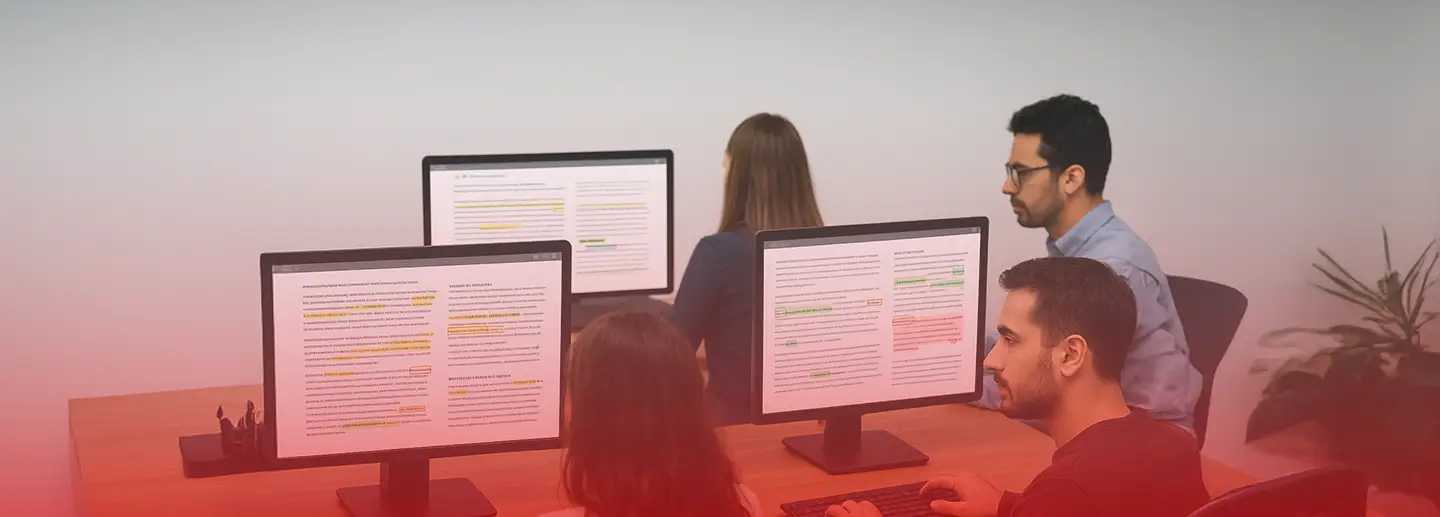
Think of project-based annotators as your on-demand annotation team. Instead of hiring full-time employees or juggling multiple freelancers, you get access to vetted professionals who are assigned specifically for your project needs.
Here’s what makes them different from traditional hiring:
- Traditional Hiring: You recruit, train, manage, and retain annotators as employees. This works if you have consistent, long-term annotation needs. But it’s slow, expensive, and inflexible.
- Freelance Platforms: You find individual annotators, manage multiple contracts, coordinate timelines, and hope for consistent quality. It’s faster than hiring but comes with coordination headaches and quality risks.
- GetAnnotators: You get matched with pre-vetted annotation teams based on your specific project requirements. They’re ready to start immediately, trained for your domain, and managed end-to-end so you don’t have to.
The difference? Speed, specialization, and zero management overhead.
Why AI Teams Are Moving to Project-Based Hiring Models
The annotation landscape has changed dramatically. Five years ago, most teams either built in-house teams or outsourced to large BPO firms. Both approaches had major drawbacks.
Today, AI development moves fast. You might be working on a medical imaging project this quarter and autonomous vehicle data the next. Your annotation needs aren’t static—why should your team be?
Get annotators who offer something traditional models can’t: elastic expertise. You scale up when you need more hands, scale down when the project wraps, and pivot to different domains without starting from scratch.
And the numbers back this up. Teams using the Get annotation report:
- 70% faster project kickoff times
- 40% lower operational costs compared to in-house teams
- 3x better quality consistency across projects
The Real Cost of DIY Annotation Hiring
Let’s talk about what it actually takes to hire annotators on your own, because most people underestimate this part.
Week 1-2: Sourcing. You’re posting on job boards, reaching out to freelancers, and checking referrals. You’ve spent 10-15 hours just getting candidates in the pipeline.
Week 3-4: Screening. Now you’re reviewing portfolios, conducting technical assessments, and interviewing. Another 15-20 hours gone. And you still haven’t hired anyone yet.
Week 5-6: Onboarding. Finally, you’ve made some hires. But now they need training on your tools, guidelines, and quality standards. Add another 10 hours for setup and initial training.
Week 7+: Management You’re now managing schedules, reviewing work, providing feedback, and handling questions. This isn’t a one-time cost—it’s ongoing overhead that takes you away from actually building your AI models.
Total time investment before you see quality output? 6-8 weeks minimum. And that’s if everything goes smoothly.
Here’s the hidden cost nobody mentions: opportunity cost. Every week you spend on annotation logistics is a week you’re not spending on model development, testing, or iteration. For startups and research teams working on tight timelines, this delay can be catastrophic.
Enter GetAnnotator: Get Annotation Done Right
This is where platforms like GetAnnotator change the game entirely.
GetAnnotator by Macgence is built specifically for teams that need Get annotators without the hiring hassle. The platform connects you with vetted annotation professionals in under 24 hours—not weeks, not months. Hours.
Here’s what that looks like in practice:
- Day 1: You sign up with your business email and fill out a quick form about your project needs. It takes maybe 10 minutes.
- Day 1 (continued): You pick a subscription tier based on your project scope. The pricing is transparent—no hidden fees, no surprise charges.
- Day 1 or 2: You’re matched with annotators from a pre-vetted pool of 200+ professionals. These aren’t random crowd workers. They’re specialists matched to your data type, industry, and quality requirements.
- Day 2 onwards: You assign tasks directly through the platform, track progress in real-time, and communicate via built-in chat. Your annotations are quality-checked and delivered on schedule.
That’s it. No recruitment, no training, no management overhead.
How GetAnnotator Handles Different Project Types
One of the biggest advantages of Get annotators is specialization. Different AI projects need different expertise, and GetAnnotator covers the full spectrum:
Computer Vision Projects: Need bounding boxes for object detection? Polygon segmentation for autonomous vehicles? Keypoint annotation for pose estimation? GetAnnotator’s teams handle 2D and 3D image annotation across all use cases.
NLP and Text Projects. From named entity recognition and sentiment analysis to translation and chatbot training, text annotation teams bring linguistic precision and domain knowledge.
Audio and Speech Projects Transcription, speaker labeling, emotion tagging—audio annotation requires both technical skill and attention to detail. GetAnnotator’s audio specialists deliver both.
LiDAR and Sensor Data Autonomous vehicle development demands precise 3D annotation and depth mapping. This isn’t entry-level work—it requires experienced annotators who understand the technical nuances.
LLM and RLHF Projects Fine-tuning language models and implementing reinforcement learning from human feedback needs senior annotators who understand AI alignment and safety. GetAnnotator’s Expert tier is built exactly for this.
The platform doesn’t force you into generic annotation services. You get teams with relevant experience, which means better output quality and less back-and-forth on guidelines.
Three Tiers for Different Project Needs
GetAnnotator offers three subscription levels, each designed for different project complexities:
Skilled Plan ($499/month) Best for straightforward annotation tasks like basic image labeling, segmentation, or text classification. You get one dedicated annotator with 2+ years experience working 8 hours/day, 20 days/month. Great for teams just getting started or working on simpler data types.
Advanced Plan ($649/month) This is the sweet spot for most AI teams. You get an experienced annotator (2+ years) plus a project manager who handles coordination. Includes enhanced workflow support, daily reporting, and quick onboarding within 48 hours. Perfect for projects that need more structure and oversight.
Expert Plan ($899/month) For complex, high-stakes projects—medical imaging, legal document analysis, LiDAR for autonomous systems, or LLM prompting and RLHF. You get a senior annotator (4+ years experience), a dedicated project manager, priority support, SLA guarantees, and real-time dashboard access.
All plans are billed monthly with no lock-ins. Scale up or down as your project needs change.
Why Get Beats In-House for Most Teams
Let’s be honest: not every company needs a full-time annotation team.
If you’re training models continuously with consistent data types and quality requirements, in-house might make sense. Large tech companies with massive, ongoing annotation needs can justify the overhead.
But for most AI teams—startups, research labs, small to mid-sized businesses—GetAnnotators offer better economics and more flexibility.
Cost Comparison: Hiring one full-time annotator in the US costs $40,000-$60,000/year plus benefits, equipment, and management overhead. That’s before you factor in recruitment costs, training time, or the risk of turnover.
GetAnnotator’s Skilled plan costs $5,988/year—roughly 10% of the fully loaded cost of a full-time hire. And you get immediate access to trained professionals with no ramp-up time.
Flexibility: Your annotation needs aren’t constant. Some months you need three annotators, other months you need ten. With Get teams, you scale in real-time. With in-house teams, you’re either understaffed or overstaffed.
Domain Expertise: Unless you’re a massive company, you can’t hire specialists for every domain you might work in. Get models gives you access to medical experts, legal specialists, LiDAR professionals, and NLP linguists without building separate teams for each.
The Management Problem (And How GetAnnotator Solves It)
Here’s a pain point that doesn’t get enough attention: managing annotators is work.
Even if you successfully hire good annotators, someone on your team needs to:
- Assign tasks and set priorities
- Answer questions about edge cases
- Review work and provide feedback
- Track progress and deadlines
- Handle administrative issues
That “someone” is usually you or your lead engineer—people whose time is better spent on model development, not project management.
GetAnnotator removes this burden entirely. The platform handles task assignment, progress tracking, and quality control. The Advanced and Expert tiers even include dedicated project managers who serve as your single point of contact.
You get to focus on what you’re good at—building AI—while annotation experts focus on what they’re good at.
Data Security: The Elephant in the Room
When you’re working with external annotators, data security isn’t optional. It’s critical.
Many freelance platforms and crowd-sourcing services have murky security practices. Who has access to your data? How is it stored? What happens after the project ends?
GetAnnotator takes security seriously:
- Full GDPR compliance for handling personal data
- ISO-certified data handling processes
- Enterprise-grade security protocols
- Clear data retention and deletion policies
For teams in regulated industries—healthcare, finance, legal—this level of security isn’t a nice-to-have. It’s mandatory.
Real-World Scenarios Where Get Annotators Win
Scenario 1: The Startup Pivot You’re building a retail AI application, but after three months, you realize the real opportunity is in healthcare. Your existing annotation team doesn’t have medical expertise. Do you fire them and hire new people? With Get annotators, you simply switch to a team with healthcare experience. No hiring, no firing, no drama.
Scenario 2: The Funding Crunch. You raised a seed round and built a 5-person annotation team. But your Series A falls through, and you need to cut costs. Laying off employees is painful and expensive. Get models that let you scale down immediately without HR nightmares.
Scenario 3: The Urgent Deadline. You have a demo for investors in two weeks and need 10,000 images annotated. There’s no time to hire and train people. GetAnnotator matches you with a larger team within 24 hours. You hit your deadline. Simple as that.
Scenario 4: The Specialized Project You need LiDAR annotation for an autonomous vehicle project—something you’ve never done before. Instead of training your existing team or hiring specialists you only need for three months, you get matched with experienced LiDAR annotators. They start immediately and deliver quality work without the learning curve.
How to Choose the Right Plan
Not sure which tier fits your project? Here’s a quick decision framework:
1.Choose Skilled if:
- You’re working on straightforward 2D image annotation
- Your quality requirements are standard (not medical/legal grade)
- You can handle project coordination internally
- Budget is a primary concern
2. Choose Advanced if:
- You need someone to manage the project end-to-end
- You’re working with mixed data types (text, image, audio)
- You want daily reporting and progress tracking
- You need faster turnaround times
3. Choose Expert if:
- Your project is in a regulated industry (medical, legal, finance)
- You’re working with complex data like LiDAR or 3D sensor data
- You need RLHF or LLM fine-tuning expertise
- You require SLA guarantees and priority support
Most teams start with Advanced. It offers the best balance of cost, support, and quality for typical AI projects.
The Bottom Line: Time Is Your Most Valuable Resource
Here’s what it comes down to: every day you spend on annotation logistics is a day you’re not improving your models.
Building great AI products requires focus. You need to iterate quickly, test hypotheses, and ship features. Annotation infrastructure shouldn’t be your bottleneck.
Get annotators—especially through platforms like GetAnnotator—remove that bottleneck. You get:
- Expert teams matched to your project in under 24 hours
- Zero recruitment, training, or management overhead
- Flexible scaling as your needs change
- Quality-checked annotations delivered on schedule
- Enterprise-grade security and compliance
The alternative? Weeks of hiring, ongoing management burden, inflexible teams, and uncertain quality.
For most AI teams, the choice is pretty clear.
Ready to Move Faster?
If you’re tired of annotation being your development bottleneck, it’s time to try a different approach.
GetAnnotator gives you access to professional annotation teams without the hiring hassle. Sign up takes ten minutes. Team matching happens in under 24 hours. Your first annotations can be delivered within days, not weeks.
No long-term contracts, hidden fees, or management overhead. Just fast, reliable, high-quality annotation that lets you focus on building better AI. Visit getannotator.com to get started, or reach out to see which plan fits your project best.
Your next breakthrough is waiting. Don’t let annotation slow you down.
 Previous Blog

Related Blogs

June 8, 2026
Why You Should Outsource Document Annotation
The demand for document artificial intelligence is growing rapidly across almost every industry. Organizations are constantly looking for ways to extract valuable insights from the massive volume of unstructured data they generate daily. High-quality annotated documents are essential for training the machine learning models that make this possible. Without accurately labeled data, even the most […]
Read More

June 5, 2026
Keypoint Annotation Outsourcing Guide for AI Teams
Building highly accurate computer vision models requires massive volumes of flawlessly labeled data. Machine learning engineers and data scientists face mounting pressure to deliver complex datasets rapidly. As computer vision applications evolve to recognize intricate movements and spatial relationships, basic labeling techniques fall short. Keypoint annotation has emerged as a critical requirement for modern AI […]
Read More
June 3, 2026
Scaling AI? Why You Should Outsource Text Annotation Services
Training a robust natural language processing (NLP) model requires massive amounts of high-quality data. AI algorithms do not inherently understand human language. They learn through carefully labeled datasets. Accurate text annotation provides the foundational context that allows AI systems to interpret nuances, sentiment, and user intent. As the complexity of AI models grows, so does […]
Read More

May 27, 2026
Building AI? Why You Need Trusted Data Annotation Platforms
The demand for high-quality AI training data is growing rapidly. Organizations are launching increasingly complex machine learning models, and these systems require massive amounts of accurately labeled data. Annotation quality directly impacts how well an AI model performs in the real world. A poorly trained model will make mistakes, cost your business money, and damage […]
Read More