

- Critical Security Statistics You Can't Ignore
- Method 1: Multi-Layer Authentication Systems
- Method 2: End-to-End Encryption Throughout Workflows
- Method 3: Zero-Trust Network Architecture
- Method 4: Comprehensive Audit Trails and Real-Time Monitoring
- Method 5: Secure Communication and Collaboration Channels
- Security Implementation Comparison Table
- Measuring Security Success
- Choose Verified Security Expertise
- Conclusion: Security as Competitive Advantage
5 Ways GetAnnotator Ensures Data Security in Remote Annotation Workflows
Remote annotation workflows handle billions of sensitive data points daily, yet the average cost of a data breach caused by remote work has surged to $137,000. With 77% of companies experiencing breaches in their AI systems over the past year, securing annotation workflows isn’t optional—it’s critical for business survival.
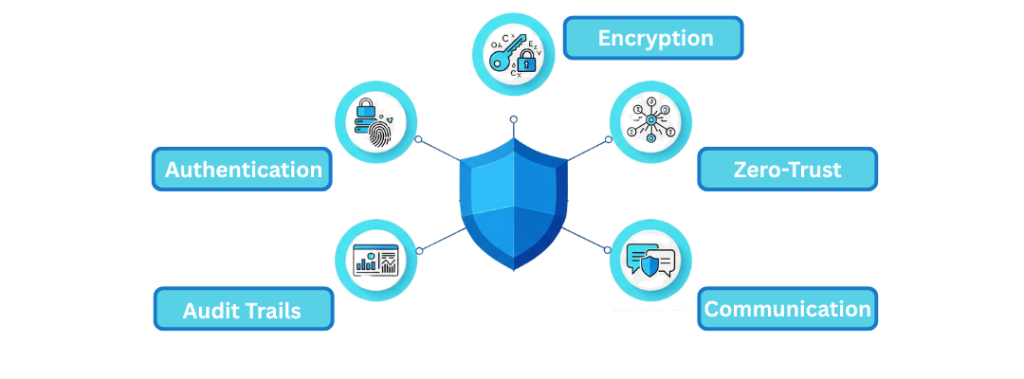
Verified annotation experts have developed proven security frameworks that protect sensitive datasets while maintaining productivity. Here are five essential methods they use to eliminate security risks in remote annotation projects.
Critical Security Statistics You Can’t Ignore
The remote annotation security landscape presents alarming vulnerabilities:
- 68% of data breaches involve human error
- 48% of remote employees use personal email for work communications
- 70% of remote workers use work devices for personal activities
- 33% of data breaches in 2024 involved shadow data
- Only 24% of AI initiatives include security components
These statistics reveal why traditional security measures fail in remote annotation environments. Verified annotation experts address these specific vulnerabilities through specialized security protocols.
Method 1: Multi-Layer Authentication Systems
Standard password protection fails spectacularly in distributed annotation teams. Verified annotation experts implement sophisticated multi-factor authentication (MFA) that combines:
Three Authentication Factors:
- Something you know (complex passwords)
- Something you have (hardware tokens/mobile apps)
- Something you are (biometric verification)
Advanced systems use adaptive authentication that analyzes user behavior patterns, detecting threats before they occur. When an annotator accesses medical imaging data from an unusual location, the system automatically requires additional verification steps.
Method 2: End-to-End Encryption Throughout Workflows
Comprehensive encryption protects annotation data at every stage:
Data Protection Layers:
- At Rest: AES-256 encryption for all stored files
- In Transit: TLS 1.3 protocols for data movement
- In Use: Homomorphic encryption allows work without exposing plaintext data
This approach ensures medical records, financial documents, and proprietary research remain protected even if multiple security layers fail simultaneously.
Method 3: Zero-Trust Network Architecture
Verified annotation experts embrace zero-trust principles that treat every access request as potentially hostile:
Core Zero-Trust Elements:
- Micro-segmentation: Network access is divided into isolated segments
- Continuous Monitoring: AI-powered real-time activity analysis
- Least Privilege Access: Users receive only essential permissions
- Dynamic Controls: Permissions adjust based on behavior patterns
This architecture ensures that breaching one network segment cannot compromise other sensitive datasets.
Method 4: Comprehensive Audit Trails and Real-Time Monitoring
Effective security requires visibility into every annotation workflow action. Advanced monitoring systems track:
Critical Monitoring Data:
- User actions (annotations, edits, access attempts)
- System events (logins, permission changes, alerts)
- Data lineage (complete dataset movement tracking)
- Performance metrics (response times, unusual patterns)
Machine learning algorithms establish baseline behavior patterns for each annotator. When activities deviate significantly—like processing 10x normal volume—security teams receive immediate alerts.
Method 5: Secure Communication and Collaboration Channels
Standard communication tools lack security features for sensitive data discussions. Verified annotation experts establish:
Secure Communication Framework:
- End-to-end encrypted messaging systems
- Secure file sharing with automatic expiration
- Anonymous communication for sensitive projects
- Segregated project channels prevent information leakage
These systems integrate directly with annotation platforms, enabling secure discussions about specific data points without requiring separate applications.
Security Implementation Comparison Table
| Security Method | Traditional Approach | Verified Expert Approach | Risk Reduction |
|---|---|---|---|
| Authentication | Single password | Multi-factor + adaptive behavior | 99.9% |
| Data Encryption | Basic TLS | End-to-end + homomorphic | 95% |
| Network Security | Perimeter defense | Zero-trust architecture | 90% |
| Monitoring | Basic logging | AI-powered real-time analysis | 85% |
| Communication | Standard email/chat | Encrypted, segregated channels | 92% |
| Implementation Time | 2-4 weeks | 1-2 weeks | N/A |
| Cost Impact | High long-term breach costs | Lower prevention costs | 75% cost reduction |
Measuring Security Success
Verified annotation experts use specific metrics to evaluate security effectiveness:
Key Performance Indicators:
- Incident Response Time: Average detection and response speed
- False Positive Rate: Legitimate activities incorrectly flagged
- Compliance Score: Regular independent security assessments
- User Productivity: Security impact on annotation efficiency
These metrics ensure security measures enhance rather than hinder annotation productivity.
Choose Verified Security Expertise
With cybercrime costs projected to reach $10.5 trillion by 2025, the gap between secure and vulnerable annotation workflows will determine business survival.
When evaluating annotation providers, verify these essential qualifications:
- Security Certifications: ISO 27001, HIPAA, and GDPR compliance
- Proven Track Record: Industry-specific case studies and references
- Transparent Policies: Clear security documentation and incident procedures
- Regular Audits: Independent cybersecurity assessments
- Insurance Coverage: Adequate cybersecurity insurance protection
Conclusion: Security as Competitive Advantage
Remote annotation security isn’t just about risk management—it’s about gaining competitive advantages through faster project timelines, reduced compliance costs, and enhanced customer trust.
The five security methods outlined above form the foundation of world-class annotation programs. Organizations partnering with verified annotation experts who implement these security frameworks protect their data while accelerating AI model development.
Don’t wait for a devastating breach to force reactive security investments. Partner with verified annotation experts who have proven security solutions ready for immediate implementation.
 Previous Blog
Related Blogs

June 8, 2026
Why You Should Outsource Document Annotation
The demand for document artificial intelligence is growing rapidly across almost every industry. Organizations are constantly looking for ways to extract valuable insights from the massive volume of unstructured data they generate daily. High-quality annotated documents are essential for training the machine learning models that make this possible. Without accurately labeled data, even the most […]
Read More

June 5, 2026
Keypoint Annotation Outsourcing Guide for AI Teams
Building highly accurate computer vision models requires massive volumes of flawlessly labeled data. Machine learning engineers and data scientists face mounting pressure to deliver complex datasets rapidly. As computer vision applications evolve to recognize intricate movements and spatial relationships, basic labeling techniques fall short. Keypoint annotation has emerged as a critical requirement for modern AI […]
Read More
June 3, 2026
Scaling AI? Why You Should Outsource Text Annotation Services
Training a robust natural language processing (NLP) model requires massive amounts of high-quality data. AI algorithms do not inherently understand human language. They learn through carefully labeled datasets. Accurate text annotation provides the foundational context that allows AI systems to interpret nuances, sentiment, and user intent. As the complexity of AI models grows, so does […]
Read More

May 27, 2026
Building AI? Why You Need Trusted Data Annotation Platforms
The demand for high-quality AI training data is growing rapidly. Organizations are launching increasingly complex machine learning models, and these systems require massive amounts of accurately labeled data. Annotation quality directly impacts how well an AI model performs in the real world. A poorly trained model will make mistakes, cost your business money, and damage […]
Read More